Mike
Rich Dad Poor DadMike is Robert T. Kiyosaki’s childhood friend, first business partner, and the son whom Rich Dad prepares to inherit his business empire. His story links a boyhood partnership built from discarded comic books to the later stewardship of a family fortune: Mike learns early to create a business rather than wait for wages, then grows into the successor who chooses to run the empire Robert ultimately leaves behind.
Identity and Background
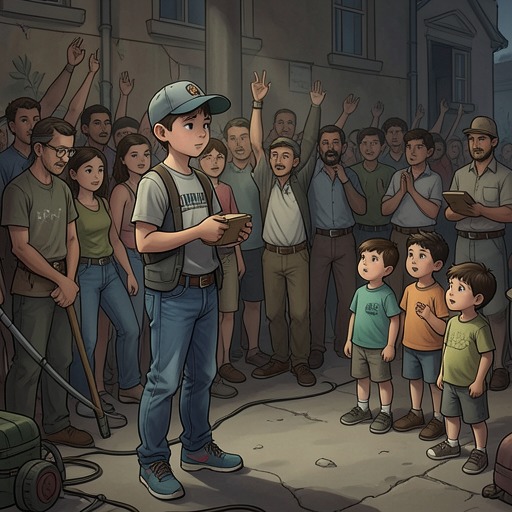
As a boy, Mike attends the same public school as Robert because a jog in the school-district boundary places both of them among children from affluent families. They are not literally without necessities, but feel poor beside classmates with new baseball gloves, bicycles, and other possessions. The exclusion is pointed: after Jimmy’s family takes him and three friends to a beach house in a new Cadillac, Mike and Robert are told they are not invited because they are poor kids.
Mike shares Robert’s desire for the things their families cannot readily provide, but their circumstances also give their friendship a practical direction. Robert’s father offers the advice that anyone wanting something should work for it, while acknowledging that there is little work available to nine-year-old boys. When Mike asks how they can make money, Robert has no answer; instead, he asks Mike to become his partner. Mike agrees, and the two spend a Saturday morning searching for an idea.
The First Partnership
The boys’ first attempt to make money grows from an idea Mike takes from a science book. They collect used toothpaste tubes from neighbors, keeping the project secret and stockpiling the tubes in a cardboard box beside Robert’s mother’s washing machine. The growing mess prompts her to threaten to throw the tubes away, and she gives them only a one-week extension. The episode ends with the business under pressure before production has even begun, showing the gap between the excitement of an idea and the demands of carrying it out.
Their more successful venture begins with a different kind of noticing. After Mike and Robert have worked for weeks without pay at Rich Dad’s convenience store, Robert sees the store owner cut the front page from returned comic books and discard the rest. The distributor explains that the discarded books can be given to the boys if they work at the store and do not resell them. Mike’s mother has an unused basement room, which the boys clear for their collection; they turn it into a comic-book library and put Mike’s younger sister in charge as head librarian.
The library operates after school, from 2:30 to 4:30 p.m. Children pay 10 cents to read as many comics as they can in two hours, a bargain when one comic itself costs 10 cents. Mike’s sister checks that customers do not take books away and keeps a daily record of attendance, names, and comments. Across three months, the business averages $9.50 a week. The boys pay her $1 weekly and let her read free, although she rarely does because she is busy studying. Meanwhile, Mike and Robert keep their agreement with the stores and the distributor: they collect the comics on Saturdays and do not sell them. Books too worn to use are burned.
The boys try to open a branch, but cannot find someone they trust who is as dedicated as Mike’s sister. The difficulty of finding reliable staff is an early lesson in running a business, not merely inventing one. Three months after the library opens, a fight breaks out when bullies from another neighborhood push their way in. At Mike’s father’s suggestion, the boys close the business; they also stop working Saturdays at the convenience store. The venture ends, but its educational consequence lasts: because they were not paid wages for their store work, they had to identify an opportunity and build a business that earned money independently of an employer.
Learning and Stewardship
Rich Dad’s instruction to Mike and Robert is to keep working while becoming less dependent on a paycheck. He argues that using their minds without immediate wages can help them see opportunities other people miss. The comic-book library becomes a concrete demonstration of that lesson: the boys convert discarded inventory into an enterprise, and its income continues without requiring them to be physically present at every moment. The business is small and short-lived, but it changes their position from workers awaiting pay to partners controlling their own finances.
Rich Dad also advises the boys to develop broadly rather than become trapped in a narrow specialty. The book contrasts that counsel with Robert’s educated father, who favors specialization and union protection for highly skilled professionals. Mike and Robert are encouraged to learn how different parts of a business system work; in companies, the equivalent process is grooming promising employees by moving them through departments. That education matters particularly for Mike, whose future is not just to receive his father’s assets but to understand the enterprise well enough to operate it.
Mike’s later inheritance is therefore presented as a responsibility as well as a transfer of wealth. Robert observes that wealthy families can lose assets in the next generation when no one has been trained to steward them. Mike is the contrast: he inherits his father’s empire, but is also described as having been groomed for the role. Possessing an asset column and learning how to preserve it are distinct achievements; Mike’s later success depends on the latter.
Later Life and Relationship with Robert
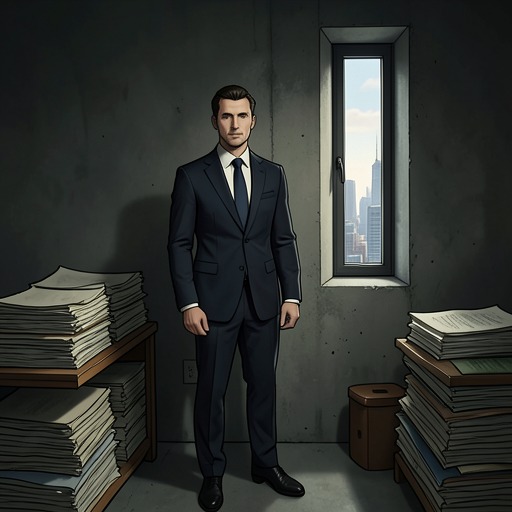
In 1990, Mike takes over his father’s empire and, in Robert’s assessment, runs it better than his father did. The childhood partner who once helped build a library from discarded comics becomes the manager of a substantial family enterprise. Rich Dad’s empire, Robert says, is in good hands. Mike is also preparing his own son to succeed him, repeating the intergenerational training through which Rich Dad had prepared Mike and Robert.
Mike and Robert remain friends into adulthood, meeting once or twice a year on the golf course. Mike and his wife are described as extraordinarily wealthy. Their adult paths nevertheless differ: Mike chooses to run the empire, while Robert chooses retirement. Robert defines retirement not as a promise never to work again, but as the freedom to work or not work while assets grow automatically and outpace inflation, barring catastrophic change. Their contrast is not a break in their friendship; it shows two different uses of financial independence, one centered on continuing to lead a business and the other on freedom from the necessity of work.
Narrative Role
Mike’s character connects the book’s practical lessons across generations. As a child, he is not merely Robert’s companion in wanting money: he agrees to form a partnership, helps pursue an idea, and shares responsibility for an operating business. The library’s records, admission charge, staff payment, supply agreement, and eventual closure make financial learning concrete, including the limits and difficulties of entrepreneurship.
His later career completes that early sequence without making the childhood venture look like a permanent triumph. The library closes after violence, and the boys’ first business has real operational limits; its lasting value lies in what they learn about opportunity, systems, trust, and money earned through an asset. Mike’s succession then supplies the long-term counterpart: he retains and develops the family enterprise, while Robert’s retirement demonstrates another outcome of learning to make wealth work. Together, their different choices make Mike both an independent figure in the narrative and a continuing measure of the partnership that began in childhood.